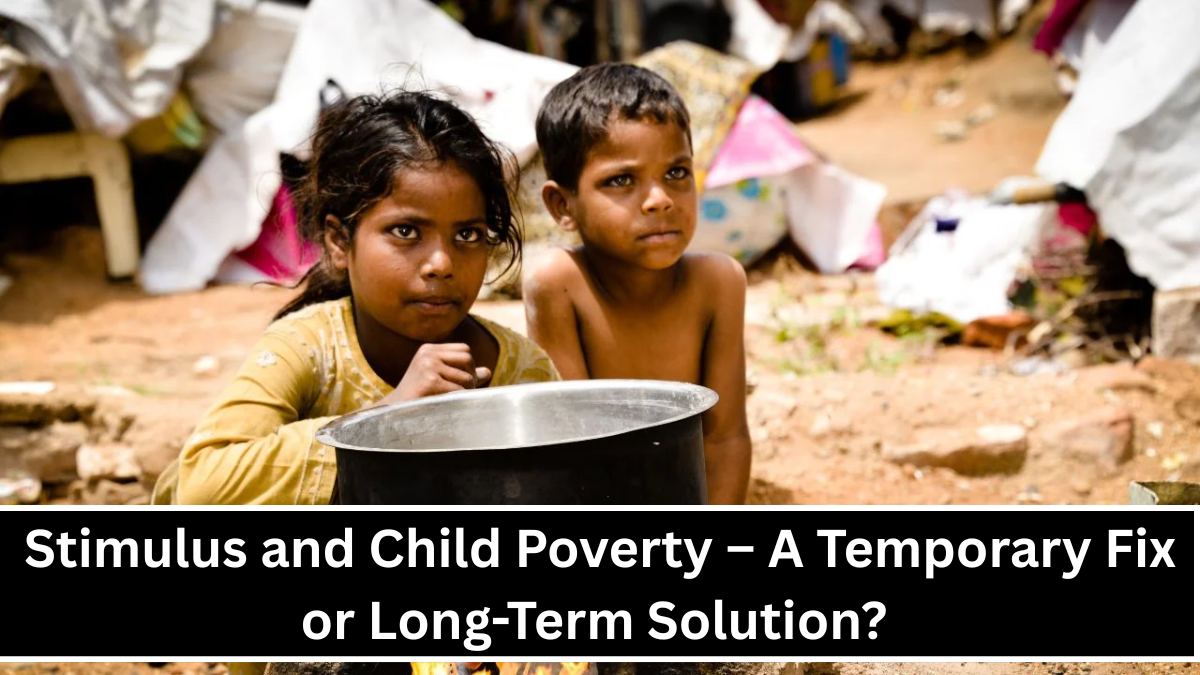
Child poverty has been a long-standing issue in many countries, including the United States. Millions of children grow up without basic needs like food, clothing, and proper housing. During the COVID-19 pandemic, governments introduced stimulus payments and expanded child tax credits to help families. These payments brought temporary relief to many and even reduced child poverty rates for a while. But the big question is: are these stimulus programs just short-term help, or can they actually lead to long-term change in reducing child poverty? Let’s take a closer look at how stimulus programs have worked, their impact on children and families, and what needs to happen for lasting results.
Program Focus: Stimulus Checks and Expanded Child Tax Credit
During the pandemic, the U.S. government issued several rounds of stimulus checks—direct payments sent to individuals and families. Along with these, a major part of the American Rescue Plan in 2021 was the expansion of the Child Tax Credit (CTC). This allowed families to receive monthly payments of up to $300 per child, instead of waiting until tax season. monthly payments provided much-needed help for struggling families. For many, the money was used to buy food, pay rent, cover school costs, or get medical care. According to studies, child poverty in the U.S. dropped significantly in 2021 because of these payments.
For example, the U.S. Census Bureau reported that the expanded CTC helped lift nearly 3 million children out of poverty in just one year. For families living paycheck to paycheck, the consistent monthly support gave them more stability and hope.
However, these programs were temporary. By the end of 2021, the expanded child tax credit ended, and poverty rates began rising again. This has led many experts to question: Should the government make these changes permanent?
The Short-Term Benefits vs. Long-Term Impact
In the short term, the stimulus programs clearly worked. Families received extra money during a tough time. Children had better food security, parents reported less stress, and more children stayed in school. For many, it was a lifeline. But the long-term impact depends on what happens next. If these programs continue, they could help reduce generational poverty. Children who grow up in stable homes tend to do better in school, stay healthier, and have a better chance at breaking the poverty cycle. But if the programs stop, families could fall back into hardship, and the temporary success could disappear.
Critics argue that continuous financial support could increase dependency or affect work motivation. Supporters argue that investing in children is not a cost but a benefit to society in the future. In short, stimulus payments were a successful temporary fix—but for lasting change, more permanent policies may be needed.
Stimulus programs like direct checks and the expanded child tax credit showed that poverty is not impossible to reduce—it’s about political will and smart policy. While these efforts gave struggling families relief and improved the lives of millions of children, the results were temporary. Without long-term strategies, the progress made will fade. To truly fight child poverty, governments must go beyond one-time payments. They need to invest in better education, affordable housing, healthcare, job training, and consistent family support. Only then can we move from quick fixes to real, long-lasting solutions.
FAQ’s:
Q1. What is the Child Tax Credit (CTC)?
A1. The Child Tax Credit is a financial benefit given to parents to help cover the costs of raising children. In 2021, it was expanded to offer monthly payments.
Q2. How did stimulus checks help reduce child poverty?
A2. Stimulus checks and expanded tax credits gave families more money to cover essential needs like food, rent, school supplies, and medical care—helping to reduce poverty temporarily.
Q3. Was the drop in child poverty permanent?
A3. No. The drop was temporary. After the end of the monthly payments in late 2021, child poverty rates began to rise again.
Q4. Why not make the expanded Child Tax Credit permanent?
A4. Some lawmakers support this, arguing it helps families. Others worry about the cost and potential dependency. Debate continues in Congress.
Q5. What else can reduce child poverty long-term?
A5. Besides financial support, solutions include affordable childcare, better schools, access to healthcare, job training, and safe housing—so families can be more self-reliant over time.