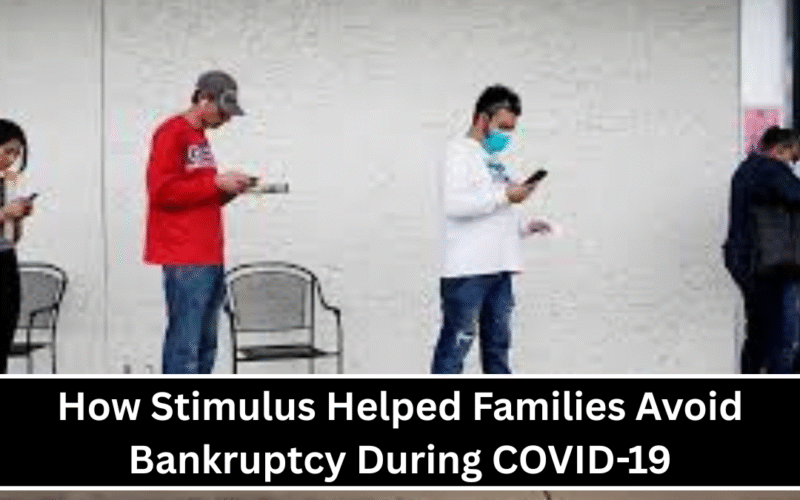
When the COVID‑19 pandemic struck in early 2020, it triggered an economic freefall unseen since the Great Depression. Millions lost jobs, medical bills mounted, and eviction or foreclosure loomed. Economists expected consumer bankruptcies to skyrocket alongside soaring unemployment. Yet surprisingly, bankruptcy filings plunged — consumer filings dropped nearly 27–28% year‑over‑year in the first eight months of 2020, while small‑business filings also declined dramatically Harvard Business SchoolHarvard Business School Library. What explains this paradox? It wasn’t an uptick in savings, but a tidal wave of federal relief—from stimulus checks and expanded unemployment to moratoria and loan forbearance. This coordinated response didn’t just cushion the blow; it fundamentally altered the trajectory of household financial distress. Let’s explore how these measures helped families stay afloat.
1. Direct Payments & Expanded Unemployment: The Immediate Lifeline (≈260 words)
The CARES Act and follow‑on aid packages delivered direct cash payments totaling up to $1,200 per adult and $500 per child beginning April 2020 Census.gov. A University of Michigan‑Census study found these stimulus checks helped households pay for food and basic expenses—especially families with children or incomes under $25,000 Axios. Crucially, the CARES Act also excluded stimulus funds from “current monthly income” calculations in bankruptcy proceedings, making more households eligible for Chapter 7 or 13 if needed Wikipedia+5mydebtadvisors.com+5University of Cincinnati Law Review Blog+5.
Simultaneously, unemployment benefits were dramatically expanded: the CARES Act added $600 per week on top of state benefits, extended eligibility to gig workers, and prolonged coverage into 2021 WikipediaWikipedia. This surge in income support significantly lowered liquidity constraints and prevented sudden defaults. Census data indicate that many low‑income households used these funds to cover essentials and even reduce pre‑existing debt Harvard Business School. Without these payments, a massive spike in bankruptcy filings would have been expected—an additional 200,000 consumer bankruptcies in Q2 2020—yet filings instead fell by tens of thousands conference.nber.org+3Harvard Business School+3Harvard Business School Library+3.
2. Moratoria & Forbearance: Shielding Essential Assets (≈260 words)
Beyond cash, relief came in the form of eviction only and foreclosure moratoria, alongside mortgage, student‑loan, and bill forbearance. The CARES Act provided eviction protection through July 2020 and suspended federally backed foreclosures until late summer Wikipedia. Similarly, federal student‑loan repayments and interest were paused, easing pressure on non‑dischargeable debt and freeing up resources for households University of Cincinnati Law Review Blog.
These deferrals served as automatic stay mechanisms, effectively replacing bankruptcy as a safety valve for homeowners and renters . With access to such protections, many postponed filing for bankruptcy—they simply didn’t need it. Law reviews and industry observers attribute the drop in filings to this combined effect of cash relief and asset‑preserving policies . Meanwhile, limited access to courts and lawyers may also have deterred filings, but fiscal measures clearly played the dominant role
The dramatic decline in bankruptcy filings during the COVID‑19 pandemic wasn’t a fluke—it was the result of a well‑timed, multi-pronged relief strategy. Direct stimulus payments and expanded unemployment provided immediate relief, while moratoria and forbearance protected families from losing homes and accumulating insurmountable debt. By keeping cash flowing and legal protections in place, these policies gave households breathing room and time to stabilize. As the relief winds down, though, millions remain vulnerable. The pandemic has shown that strategic government intervention can avert financial disaster—but it also highlights the fragility of household finances and the need for ongoing support mechanisms.
FAQ’s:
1. Why did bankruptcy filings drop during such high unemployment?
2. Did every family benefit from the stimulus?
No. Some, like the non-filers (those without tax returns), the homeless, and mixed-immigration-status families, faced delays or missed payments
3. Were stimulus checks counted as income for bankruptcy purposes?
4. Did forbearance lead to more financial trouble down the road?
Possibly. While forbearance provided short-term relief, deferred payments may become due later. Future impact will depend on individual repayment plans and income recovery.
5. Will bankruptcy filings rise once relief ends?
Likely. With stimulus, eviction moratoria, and unemployment benefits scaling back, households may face renewed financial pressure, potentially leading to a rebound in filings.